Cannon House: Balancing Modernization with Preservation
July 2, 2026
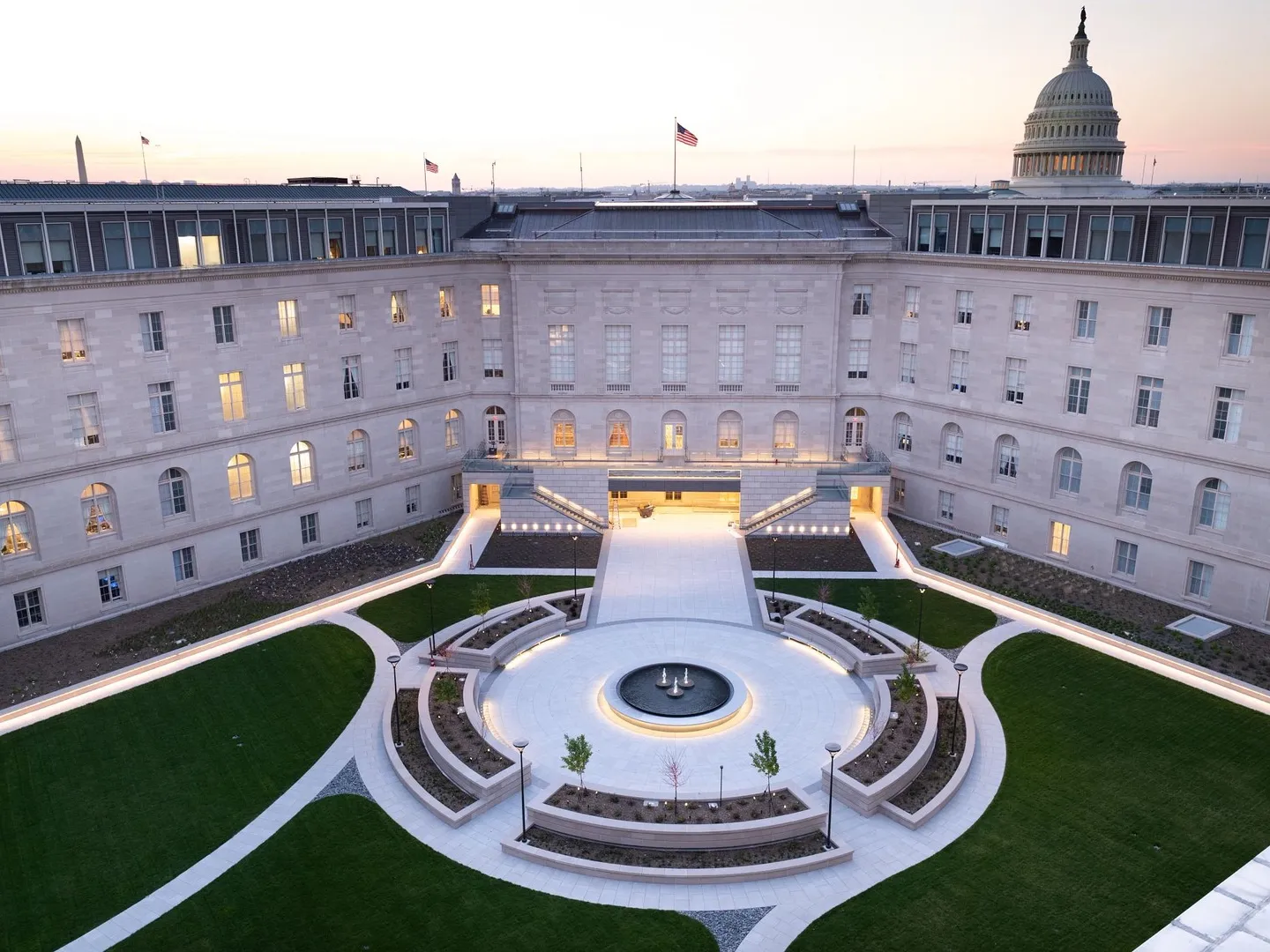


As the oldest Congressional office building outside the Capitol, the nearly 120-year-old Cannon House Office Building had not seen a comprehensive systems upgrade since the 1930s and was in critical need of updating. Clark, with joint venture partner The Christman Company, recently completed the 12-year, five-phase Cannon Renewal Project, renovating the entire building and addressing accessibility and structural issues throughout the legislative premises. The scope included the replacement or repair of heating, cooling, lighting, plumbing, fire, and life-safety systems, as well as the addition of new fifth-floor offices, and the preservation of historic building components. The project, carefully planned and executed in conjunction with The Architect of the Capitol (AOC) to minimize impact on lawmakers, successfully modernizes the functionality, efficiency, comfort, and safety of the office space while retaining the building’s historic grandeur.
The project, carefully planned and executed in conjunction with The Architect of the Capitol (AOC) to minimize impact on lawmakers, successfully modernizes the functionality, efficiency, comfort, and safety of the office space while retaining the building’s historic grandeur.
Phasing a 12-Year Project
One of the project’s greatest challenges was minimizing the logistical impacts of construction on Congressional operations. To achieve this, Clark/Christman divided the decade-long endeavor into five phases (Phases 0-4) aligned with the Congressional move cycles.
Phase 0 included installing and upgrading utilities in the basement and courtyard to support the renovation work. Phases 1 through 4 then tackled the building's main wings, one side at a time. Each of these phases required the affected wing to be vacated, with members relocated at the end of the Congressional session for the following session.
Construction crews worked around the clock, scheduling the loudest, most disruptive construction activities for late-night and early-morning shifts.
Image
Constructing a New Top Floor
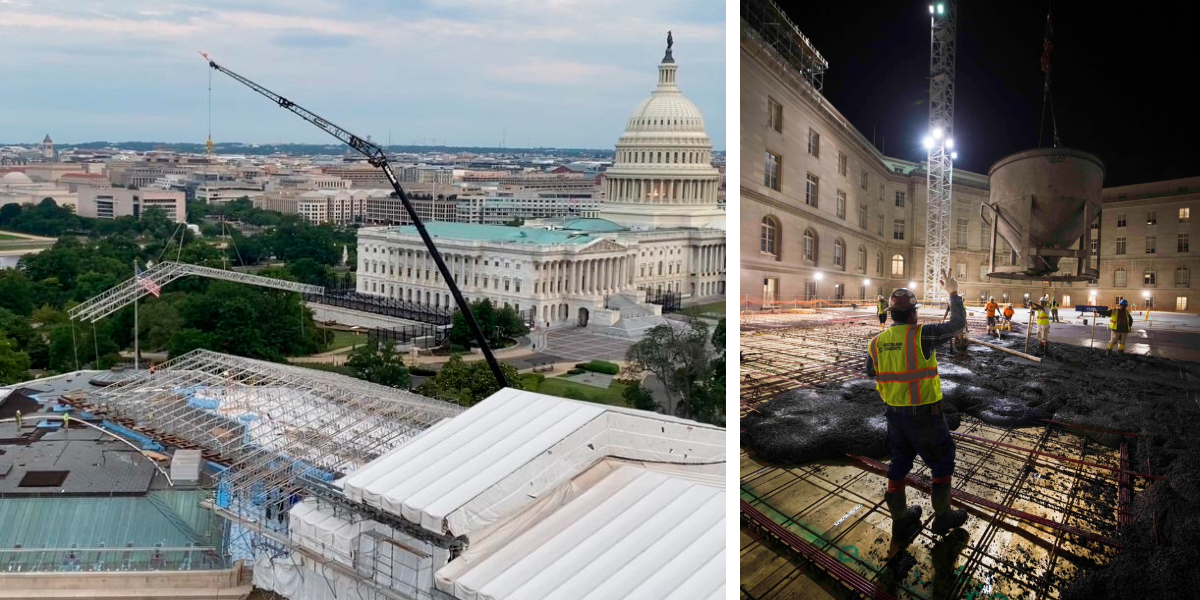
A major structural highlight of the project was the total transformation of the fifth floor. Originally added in 1913 after the House outgrew its initial 397 offices, the floor had primarily served as storage. To meet the growing demands of legislators, the team demolished the existing fifth-floor walls and roof. They then constructed an entirely new blast-rated fifth floor, with steel framing tying directly into the existing structure.
Before demolition began, the team repaired, refinished, sealed, and protected the original marble flooring in the fifth-floor corridor. The stone remained in place throughout construction, seamlessly anchoring the new office space – which now mirrors the layout of the floors below – to the building’s rich history.
Image
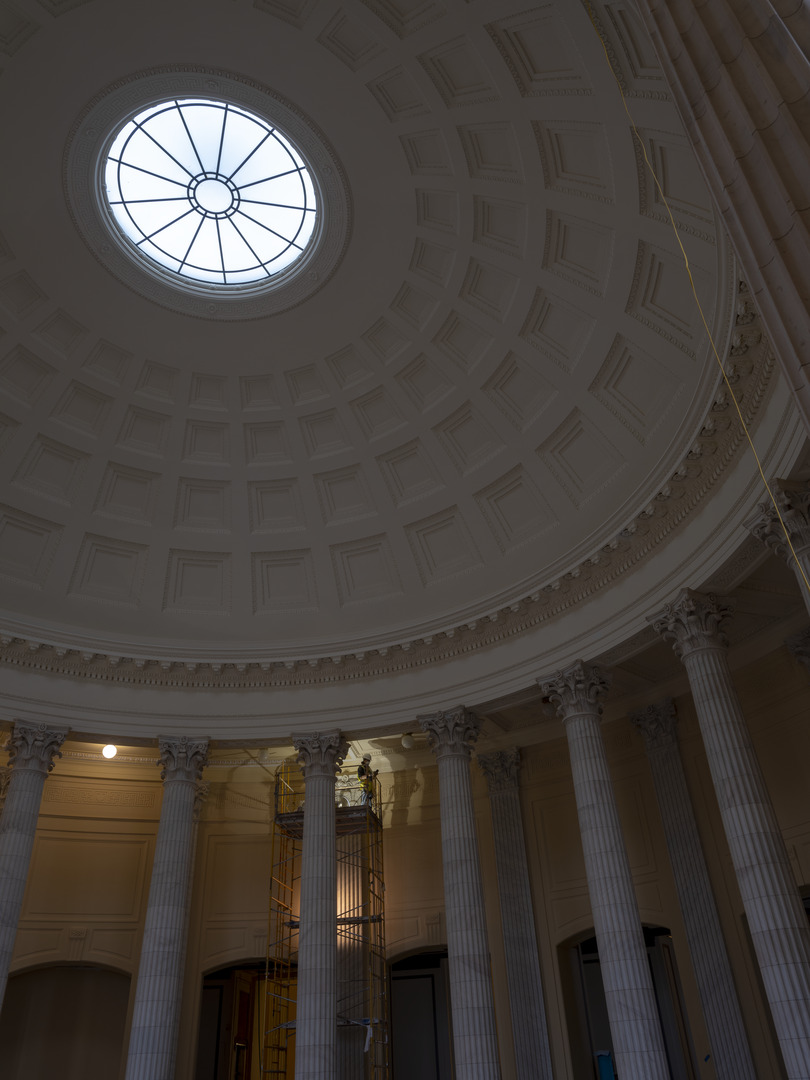
Beyond structural engineering, the project required striking a delicate balance between necessary updates and historic preservation.
Preserving the Details
Beyond structural engineering, the project required striking a delicate balance between necessary updates and historic preservation. The exterior stone façade underwent an extensive partial facelift: all original windows were restored, and the stone masonry was meticulously cleaned, pointed, and sealed to protect against the elements. Because the north elevation’s original Dover, New York, marble was no longer available, the team carefully sourced Vermont marble as the closest visual match.
Along Independence Avenue, the building's grand colonnade features 34 fluted Doric columns. Work followed a strict methodology led by the AOC: remove any loose stone, while embracing the building’s age. Instead of striving for a flawless, like-new aesthetic, teams stabilized the columns while intentionally leaving behind the minor nicks and gaps accumulated over time.
This detailed preservation work, combined with the overhaul of building systems and the addition of the new fifth-floor, results in a resilient, modernized workspace that pays homage to its history while serving the US House of Representatives for decades to come.