Rooted in Performance: Crafting World-Class Athletic Fields
May 5, 2026


Delivering elite athletic fields requires more than laying sod or installing turf; it demands a deep understanding of performance standards, site logistics, and sport-specific needs. From synthetic turf systems to natural grass and hybrid installations, Clark delivers fields that meet the performance requirements of collegiate and professional teams alike, ensuring each field performs at the highest level.
MEETING THE GAME'S DEMANDS
Building a high-performance field starts with defining its purpose. The needs of a baseball practice field differ greatly from those of a FIFA-certified soccer pitch. Governing bodies and institutions often set detailed standards, such as surface firmness, shock absorption, and drainage performance, that guide product selection and installation methods.
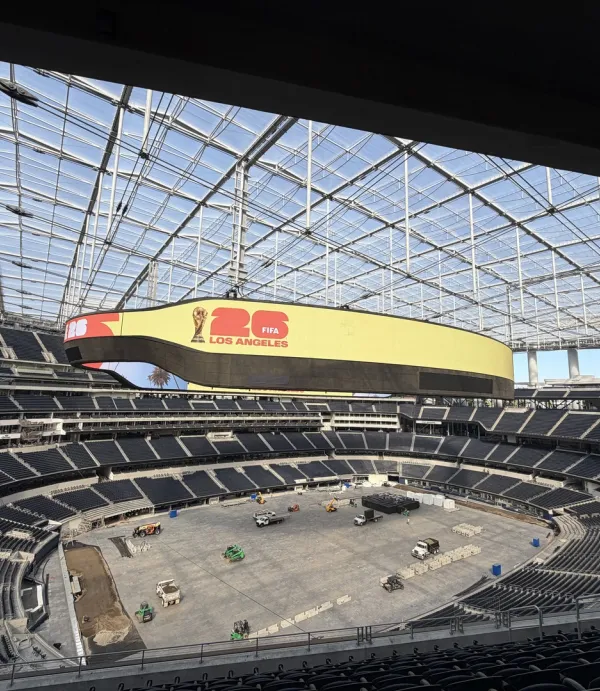
At SoFi Stadium in Inglewood, California, Clark is performing modifications to prepare for the 2026 FIFA World Cup. The success of this project rests in the ability to deliver to the exacting standards of FIFA, which provides detailed guidance on field layout and safety testing, including specific pitch dimensions and rigorous post-construction evaluations. These tests verify consistency across athlete-to-surface and ball-to-surface interactions.
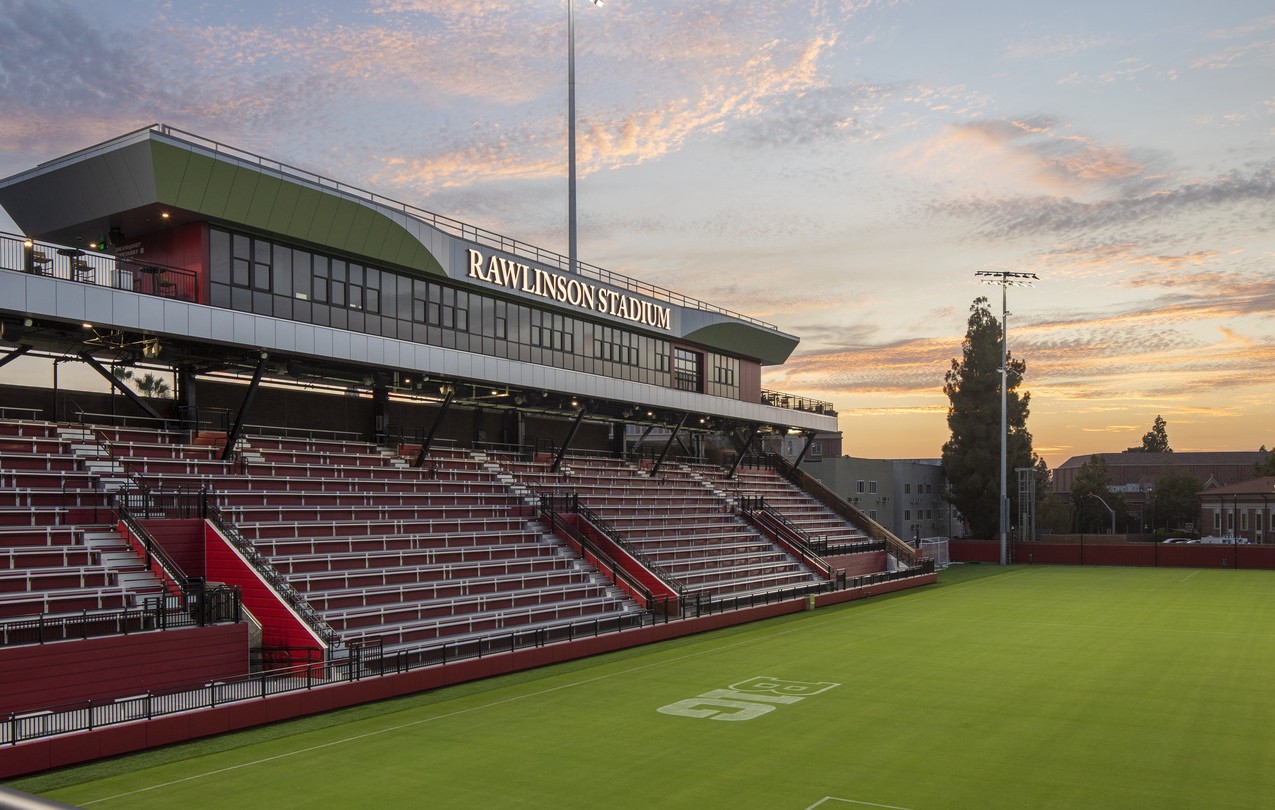
For synthetic turf installations, like the one currently underway at the University of Southern California (USC) Bloom Football Performance Center, GMAX testing – a method for assessing shock attenuation performance – is critical to ensure safe levels of impact absorption and reduce the risk of player injury. Even for natural grass fields, like those being delivered at the USC Athletics West Baseball Complex and Rawlinson Stadium, surface hardness must be evaluated meticulously to support both safe footing and consistent ball movement.
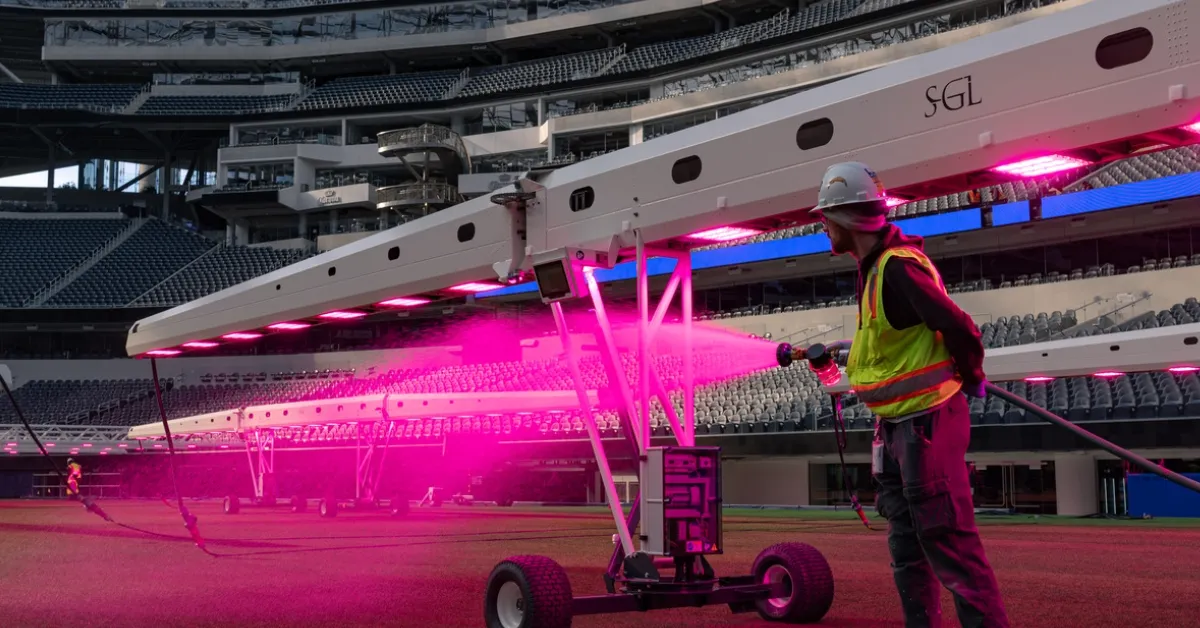
The construction approach varies based on the field's sporting use, site conditions, and intended lifespan. Indoor-outdoor venues like SoFi Stadium that have a canopy roof, require artificial grow lighting systems due to limited natural sunlight, while outdoor fields can rely more on natural elements but may also face challenges with weather, site utilities, and long-term maintenance planning. Beyond the physical setting, adjustments are made based on the flexibility required by sports programming. With a temporary configuration, like SoFi Stadium's adaptable configuration for an event such as the World Cup, planning must account for building a substrate on top of the stadium's existing surface, and the complex logistics of working within the stadium bowl between major events such as concerts and other professional sports games.
Image
BEYOND A SURFACE-LEVEL UNDERSTANDING
The combination of specialized systems at and below a playing field’s surface lays the groundwork for peak performance. Drainage, subgrade, and sod or turf systems are customized according to the sport and surface type.
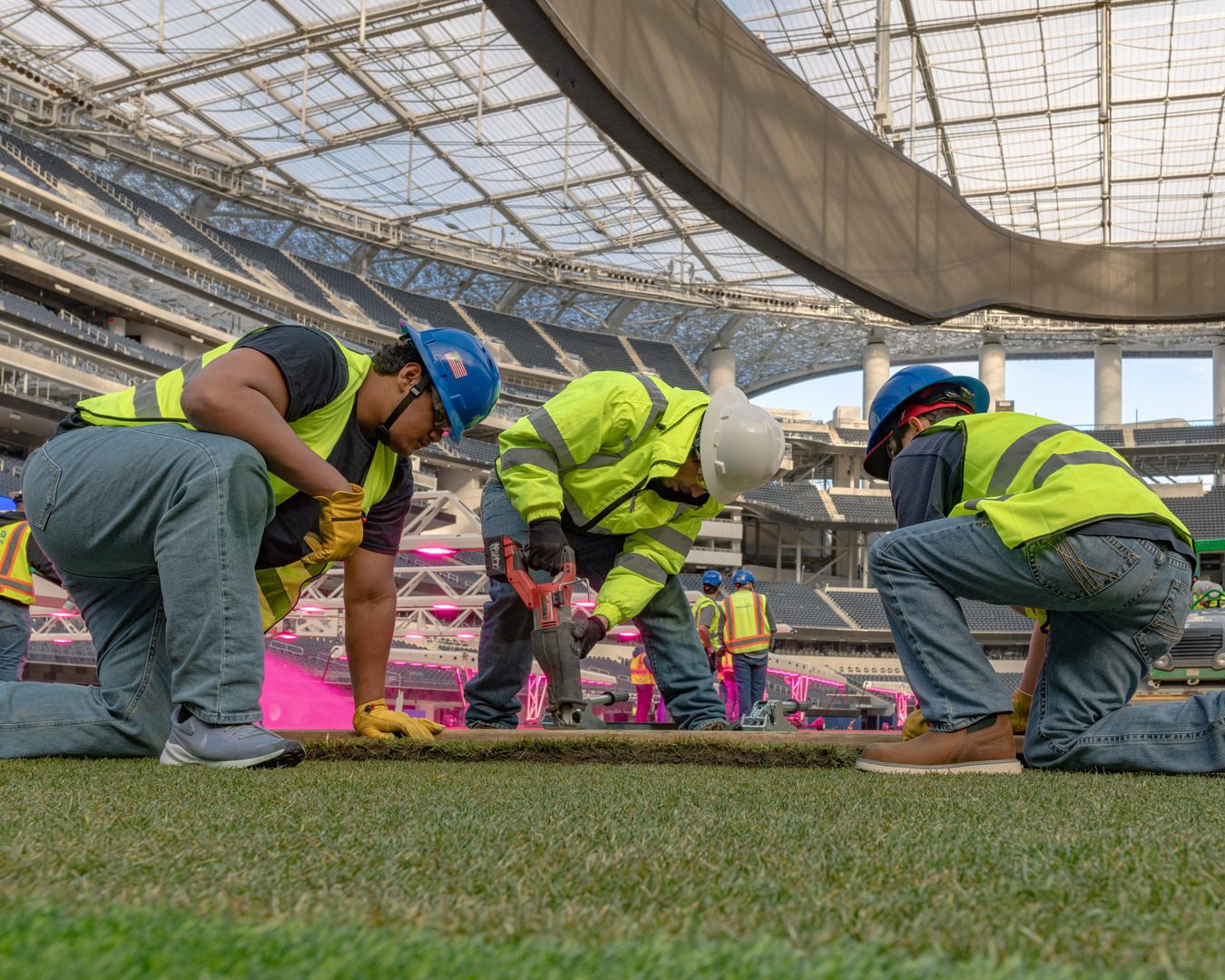
Most natural grass fields start with a laser-graded subgrade, followed by a four-inch gravel layer placed above subsurface drainage. This is topped by an eight- to twelve-inch root zone layer, typically a sand-based mix that provides drainage, stability, and nutrient support. The range in root zone thickness depends on factors such as budget, sod thickness, and whether the installation is temporary or permanent.
Quality sod is a cornerstone of natural grass field performance. Sod must be mature, structurally stable, and tailored to the intended sport and environment. Clark teams routinely coordinate with sod farms up to one year in advance, conducting multiple site visits to verify rooting strength, thickness, uniformity, and density. For the SoFi Stadium project, the grass was grown nearly a year ahead of its installation at a farm in eastern Washington State. This level of quality control ensures a reliable surface from the day of installation, particularly in high-stakes environments like enclosed stadiums where lighting conditions may hinder turf development.
Synthetic turf systems require a different but equally meticulous approach. These fields often include a layered stone base, a shock-absorbing pad, and finally, the rubber and sand turf infill. At the USC Bloom Football Performance Center, a shock pad layer also acts as a drainage board to optimize impact absorption in alignment with GMAX safety standards.
Image
TECHNOLOGY ON THE FIELD
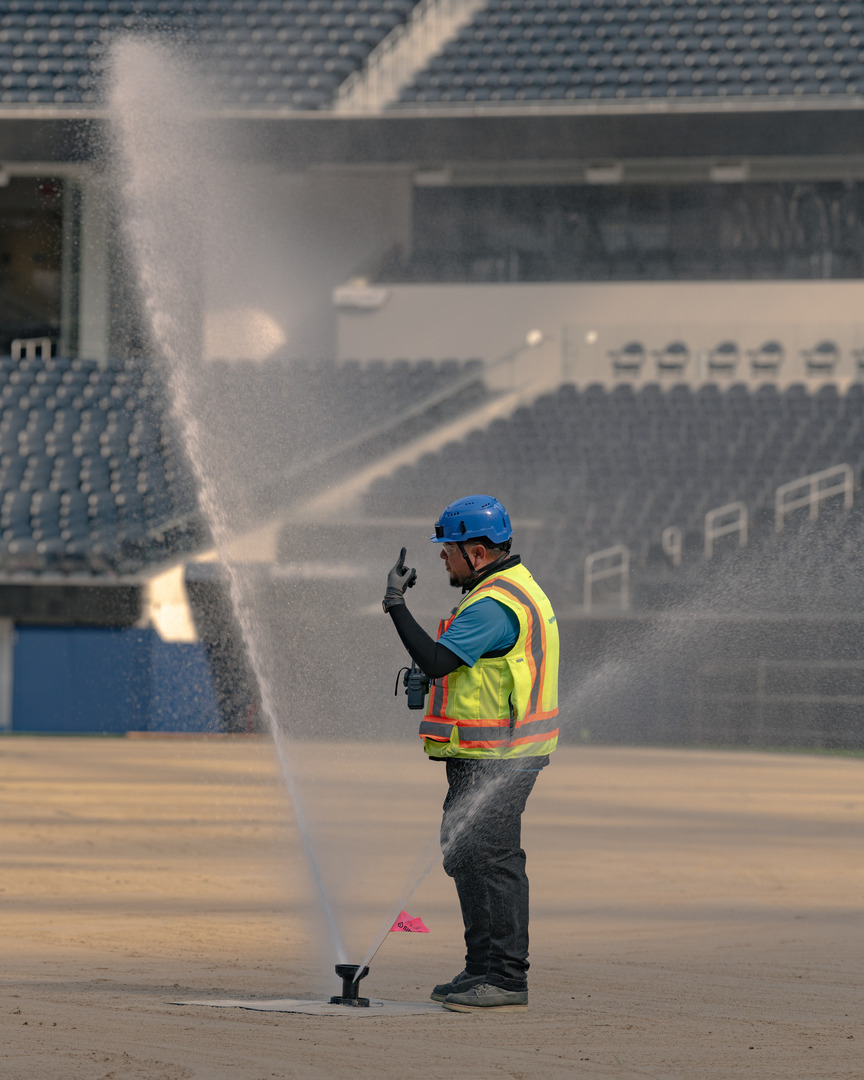
Technology also plays a critical role enhancing field performance. Current tools range from soil moisture sensors and programmable irrigation systems to drone-assisted fertilization on sod farms. For shaded or indoor environments, grow lights replicate the necessary UV exposure for healthy turf growth. In some cases, turf is grown off-site under controlled conditions with drone-assisted fertilization methods to meet specific maturity timelines, as seen with the FIFA-modified surface at SoFi Stadium.
On the USC Rawlinson Stadium project, the team used sod grown on plastic to promote lateral root growth, allowing the root to integrate into the soil more quickly and reducing the planting period. Furthermore, on the USC Athletics West Baseball Complex project, the team utilized simple but effective moisture retention strategies through a blanket system to accelerate turf establishment and reduce growth time by nearly half. This combination of traditional field care methods and modern technology enables Clark to meet demanding schedules while maintaining high quality.
Image
Delivering elite athletic fields is a sophisticated endeavor, demanding a holistic approach that extends far beyond the visible playing surface. As demonstrated by projects like those at USC and SoFi Stadium, the success of these fields hinges on meticulous planning, adherence to rigorous performance standards, and the strategic integration of advanced technology. Clark's expertise in managing every detail – from the subsurface drainage and root zones to the selection of specialized sod or synthetic turf and the implementation of cutting-edge tech like grow lights and moisture retention systems – ensures that every field not only meets but exceeds the exacting demands of collegiate and professional sports, providing a foundation for peak athletic performance.