It's Hangar Time: Tackling the Complexities of Hangar Construction
July 21, 2025
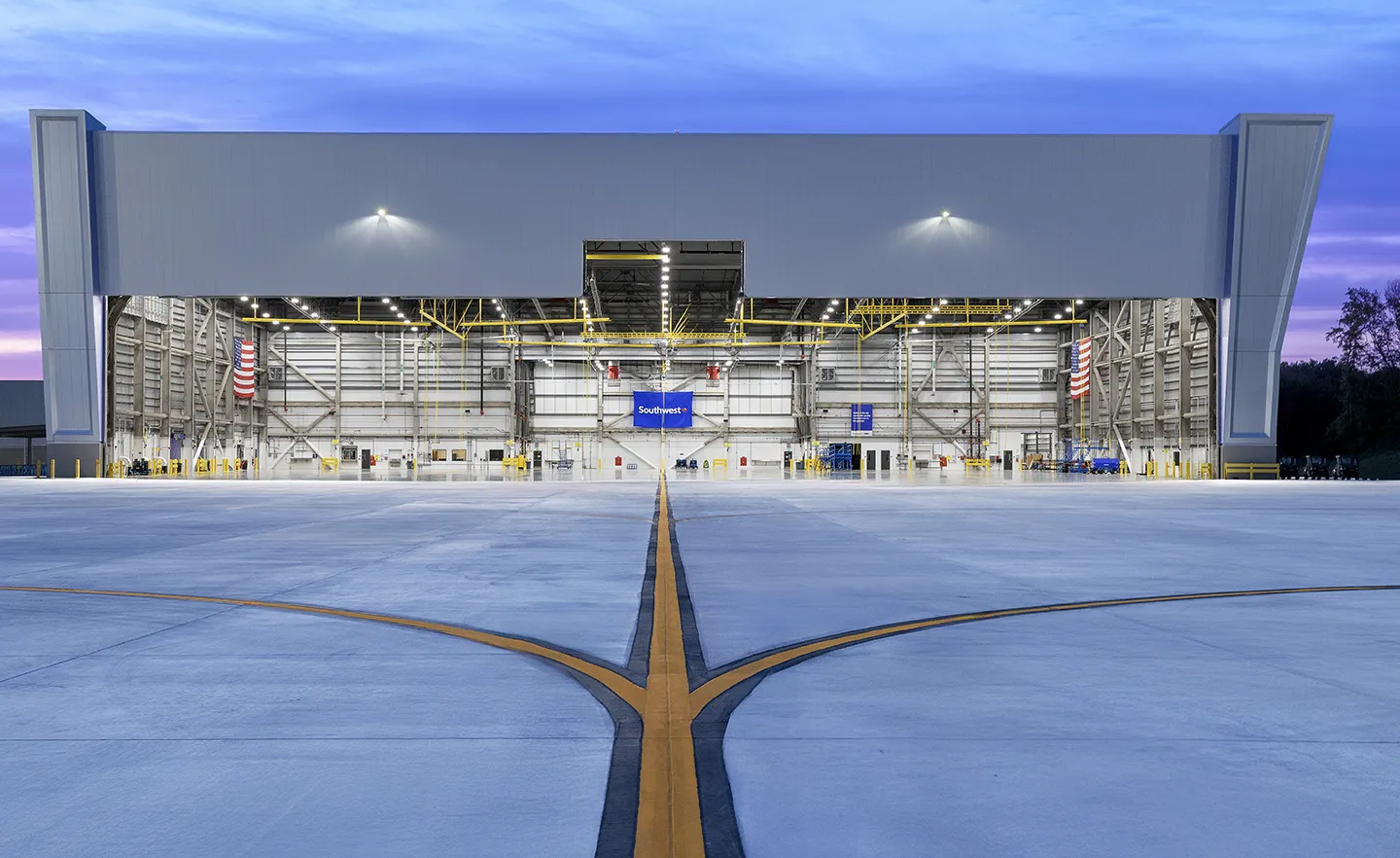


Think about the sheer scale of modern aircraft – the massive wingspans, towering tails, and intricate machinery. Now imagine building a structure large enough to house them, a facility that not only provides ample space but also incorporates cutting-edge technology and rigorous safety systems. Welcome to the world of hangar construction.
These aren't just big boxes; they're complex engineering marvels, integral to aviation operations. From colossal structural challenges to the implementation of critical systems, constructing an aircraft hangar demands specialized knowledge and meticulous execution.
Jumbo Structures
Image

Large truss assemblies are fundamental to hangar construction, providing the necessary strength and stability for the structure while creating the vast, unobstructed interior space required for commercial and military aircraft. At Southwest Airlines’ New Tech Ops Hangar East at Baltimore/Washington International Thurgood Marshall Airport (BWI), crews coordinated a 27-hour tandem crane lift to hoist a colossal 300-foot-long, 700,000-pound box truss 70 feet in the air to form the aircraft entrance. The lift required two cranes and demanded meticulous planning and flawless execution to successfully secure the massive truss into place.
Specialized Expertise
Image
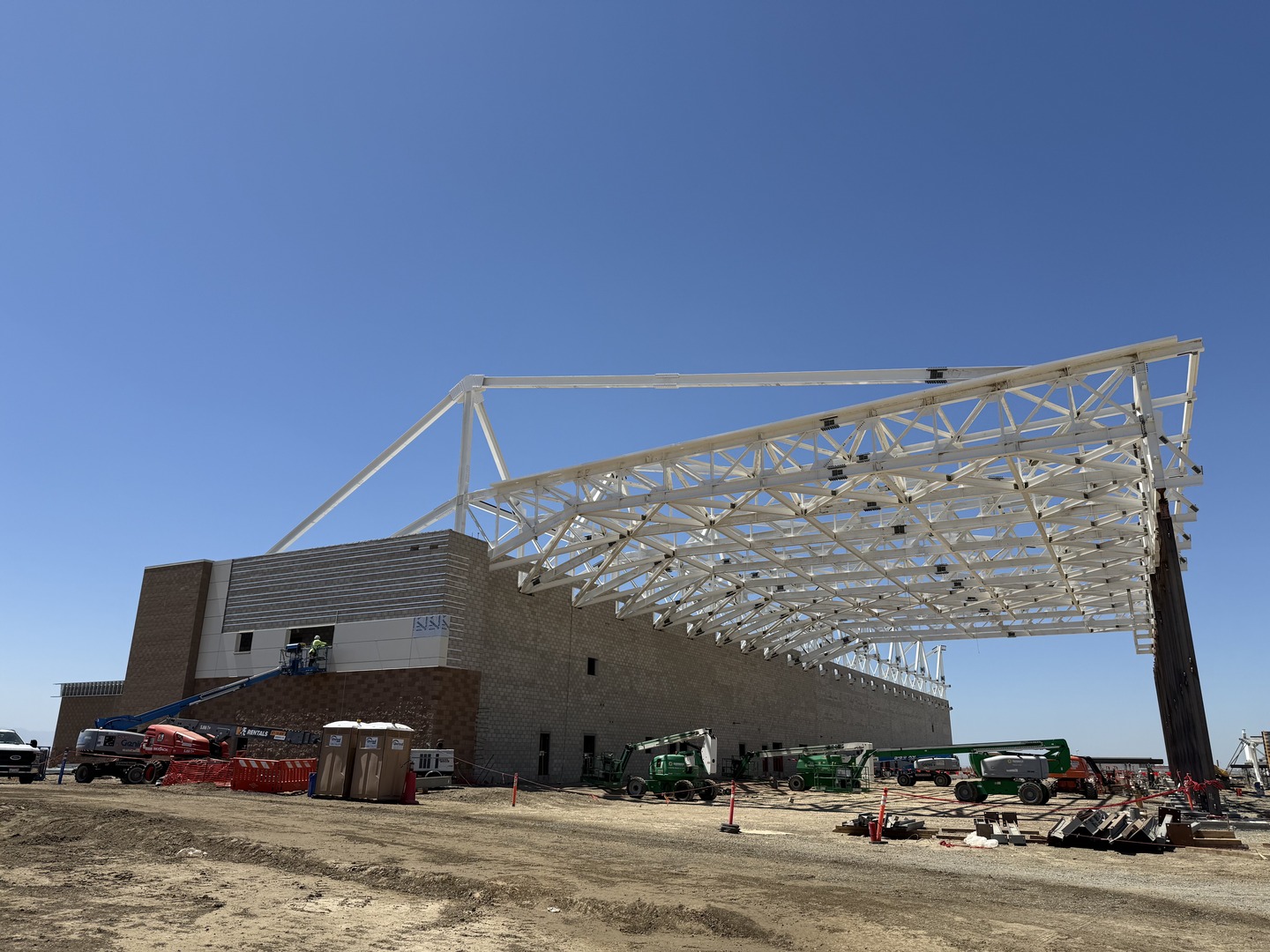
Crucial to hangar construction, airfield paving demands specialized expertise beyond typical concrete work. Leveraging in-house capabilities, Clark crews are installing one million square feet of airfield paving for Naval Facilities Engineering Systems Command (NAVFAC) Southwest’s largest-ever airfield expansion in Lemoore, California, as part of the P-351 F-35C Aircraft Maintenance Hangar project. The expansive area and continual aircraft traffic require seamless pours that are precisely leveled to support the heavy loads over time. Seamless pours of thicker, more durable concrete are required to resist cracking and breaking, not only for load support, but to minimize foreign object debris, which is essential to protect aircraft engines. The integrated approach ensures airfield paving meets the most demanding industry requirements, delivering excellence for our clients.
Critical Systems
Image
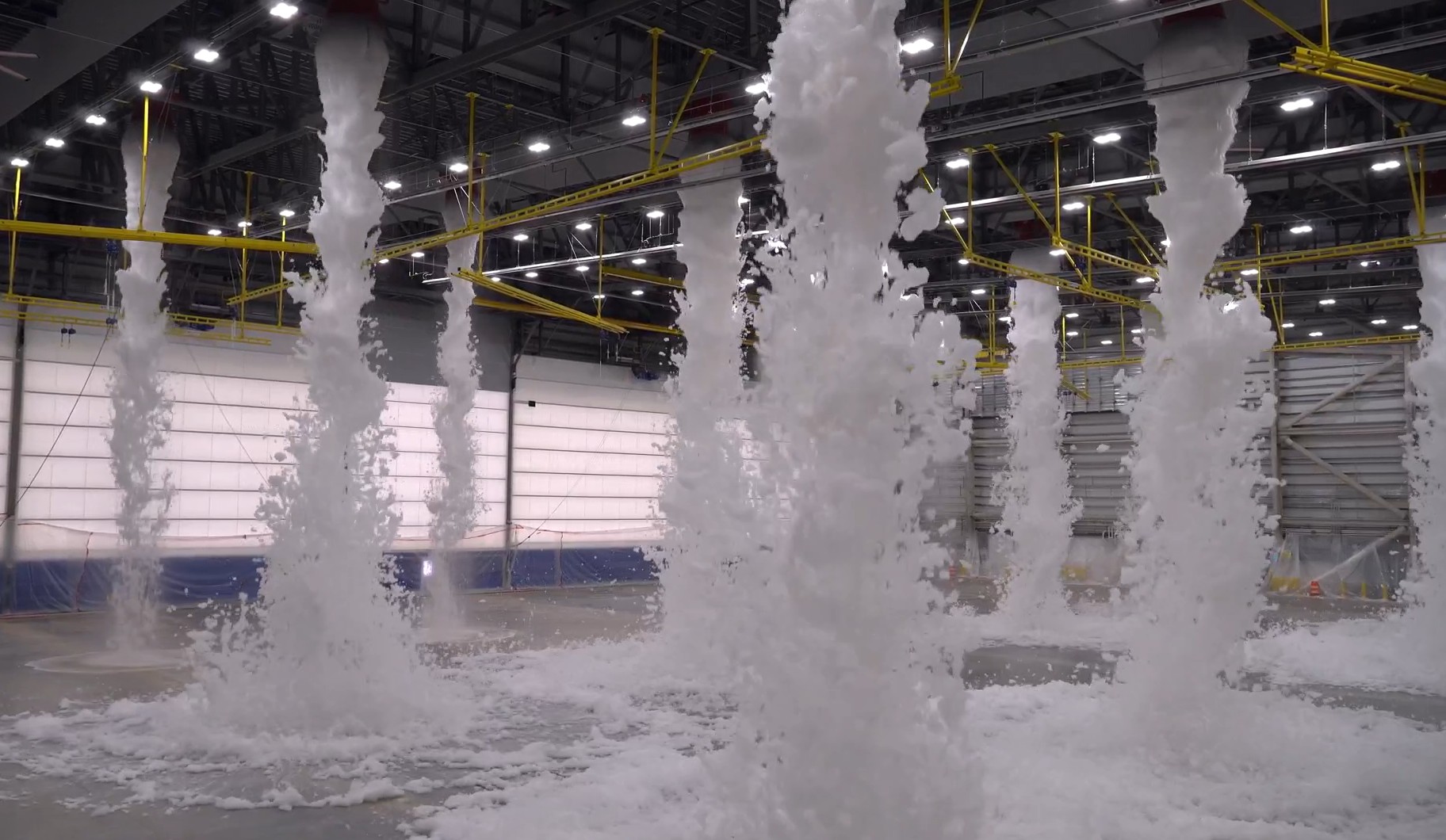
Due to the explosive nature of jet fuel, extensive fire suppression systems are critical to permit aircraft entry – planes cannot enter the hangar if the system is offline. The National Fire Protection Association (NFPA) has safety measures specific to aircraft hangars, including the installation of a foam fire suppression system. The Southwest Airlines BWI New Tech Ops Hangar East has a complex pump system built to precisely mix foam concentrate and water in real-time during a fire event. Achieving the optimal solution ratio posed a challenge, as the only way to accurately test the foam in the system is through running a full-scale foam discharge test, and essentially flooding the hangar. Once conducted, the team successfully calibrated the ideal chemical ratio, ensuring a critical fire suppression response to any future jet-engine fire.
Modern aircraft hangars demand mastery over grand-scale structures, the precise integration of critical systems, and specialized expertise. Clark consistently rises to these challenges to build the essential infrastructure that powers our nation's aviation.